

When actuation became central in his Philips projects, Vinayak Kalas wanted more than old university notes. The “Actuation and power electronics” course, taught by Mechatronics Academy’s engineers with real industry experience, offered exactly the practical, structured clarity he needed to apply the fundamentals the next day.
Vinayak Kalas, technologist in mechatronics at Philips, can be asked to handle anything mechatronic, from shaping the performance of a shaver to advising teams on the vibrational behavior of medical imaging systems. “My job is quite hands-on.”
To his group, mechatronics is mainly the interplay of actuation, sensing, dynamics and control. Kalas advises teams, designs concepts and solves increasingly complex problems. For him, actuation plays a central role, but the topic hadn’t been addressed educationally since his bachelor’s. “I wanted to get up to speed with the physics behind actuation,” he explains, “and digging up old university notes wasn’t enough.”

Kalas’ background spans a mechanical engineering degree from Twente, a PhD in precision robotics in France and a position as dynamics architect at VDL ETG, working mainly on wafer handlers for ASML systems. For his work at Philips, he was looking for the structured, expert-level clarity that High Tech Institute is known for. Their “Actuation and power electronics ” course offered several days of structured deep-dive into this material. By sitting down and immersing himself again, he could refresh his theoretical foundation around actuation and reconnect the theory to the tools used in real
Steep learning curve
What stood out to Kalas immediately was how quickly the course moved from first principles to the realities of modern actuator design. It opened with the kind of fundamentals you normally have to dig out of a thick textbook and then built up fast toward linear actuator design at the current technological frontier. “The course had a steep learning curve,” Kalas says, “but the structure stayed clear and approachable.”
The setup reflected real engineering practice: basic concepts in actuation and power electronics on day one, followed by a natural, logical alternation between electronics and actuation on days two and three. Lorentz actuators, practical considerations and thermal issues were stacked into a narrative that made sense.
'If you’re designing, creating or troubleshooting systems like these, this course really helps.'
The mix of theory, exercises and practical adaptations gave Kalas exactly the depth he was looking for, as well as the practice to understand how to apply the theory. “In university, there’s a lot of superfluous theory. Learning on the job gives you hands-on knowledge but can lead to a lack of theory that might help you improve. The theory covered by the course was just relevant enough, while the hands-on exercises helped translate theory into practice.” For him, that combination is what makes High Tech Institute’s courses stand out and what makes the knowledge stick.
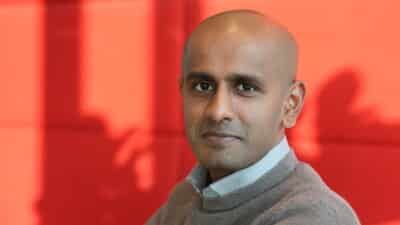
One example from Kalas’ daily work brought the course into sharp focus. Faced with a project requiring a specific force, his team had been trying different tricks to get there. Kalas wanted to use magnets but needed a solid mathematical basis to predict the force at the interface. The course gave him both those tools and the mental framework to interpret what the models were telling him. “You never model reality completely,” he explains. “You model a representation of reality.” The training helped him understand how to bridge that gap and make reliable first-order statements about what the application could actually deliver.
Expertise from experience
Actuation, sensing, dynamics and control form the core of most motion and positioning systems Kalas works with, and the training gave him a solid framework for tackling exactly those challenges. “If you’re designing, creating or troubleshooting systems like these, this course really helps,” he says. The closer your work is to the hardware, the more directly applicable the knowledge becomes.
This fits with Kalas’ previous experience with High Tech Insitute’s courses on mechatronic system design, advanced motion control and systems architecting. To this day, he still uses slides from those courses when encountering something that was covered there. The reason, he says, is simple: “These courses are taught by people from the industry, who really know what they’re doing.”

What Kalas appreciated most was the accessibility of the material. The course distilled the fundamental principles into a form that engineers can carry into their daily work. As for criticism? None comes to mind. The course delivered exactly what he expected, which is clarity, depth and tools he could use the next day.
Kalas doesn’t have immediate plans for another course, but that’s not for lack of interest. He prefers to take a training when it directly connects to a topic he’s working on, either now or in the coming months, so the knowledge lands exactly where he needs it. “There are a few interesting ones,” he says, “but I’ve also already followed quite a few courses. Maybe next year, if the timing aligns with a real project. That’s when a course becomes most valuable.”
This article is written by Marleen Dolman, freelancer for High Tech Systems.
The training 'Actuation and Power Electronics' is held once a year.
Keep up to date
Receive our monthly updates


