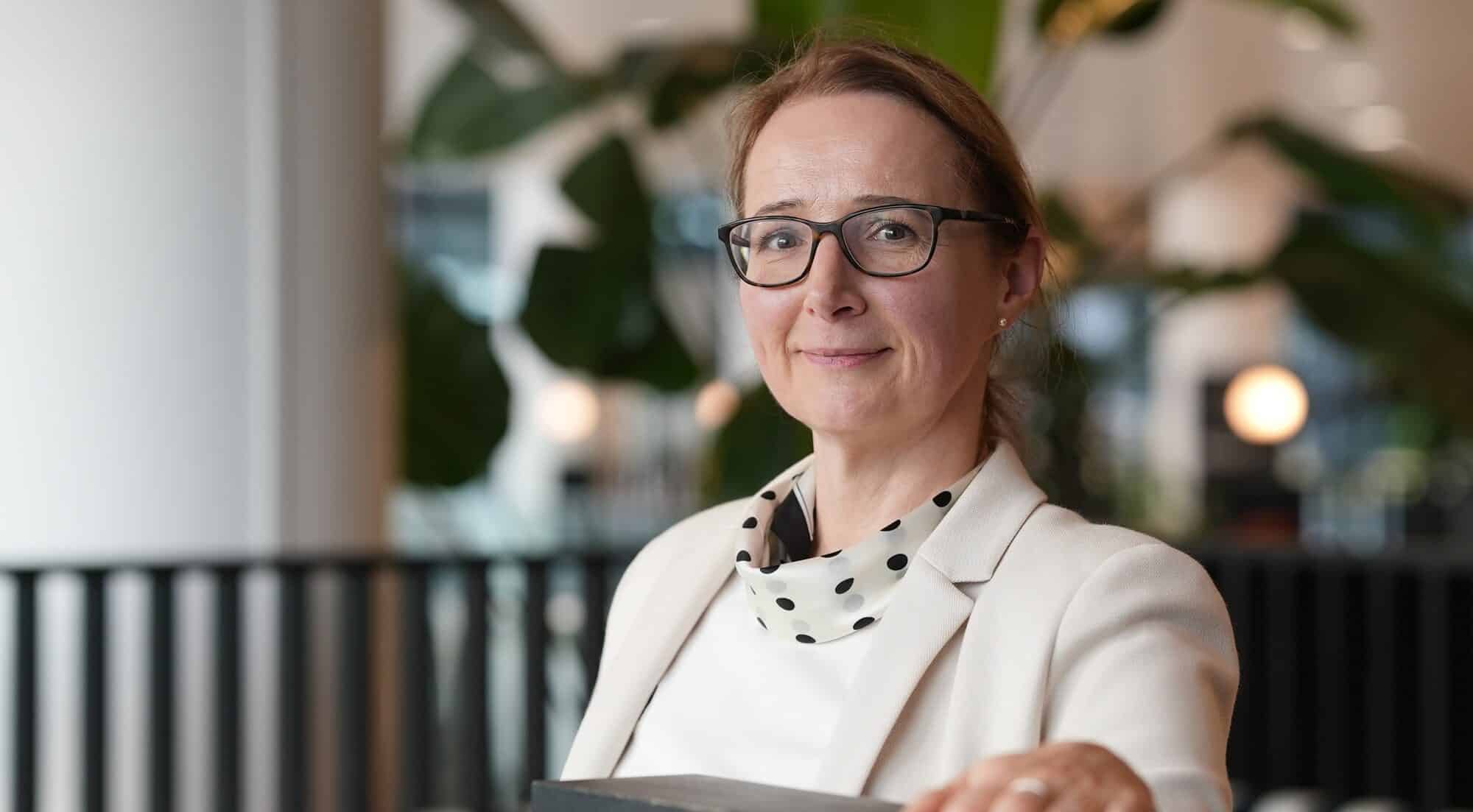
“Requirements aren’t about writing, but about engineering”

Trainer Katarzyna Kot
Anyone who’s ever been involved in product development knows that misunderstandings in the early stages will cost time and money later on. Yet many projects still struggle to clearly define what needs to be built. Katarzyna Kot, systems engineer and member of the INCOSE Requirements Working Group, sees it happen every day. She has made it her mission to teach professionals how to write and understand requirements more effectively.

“My heart is with product development,” says Katarzyna. “You want to deliver something tangible, but that only works if the foundation is solid. For that, you need clear requirements.”

Katarzyna came to the Netherlands from Poland in 1998 to work at Philips ASA labs in Eindhoven. “I wrote code, designed software, tested products, and became fascinated by what happens before all that.”
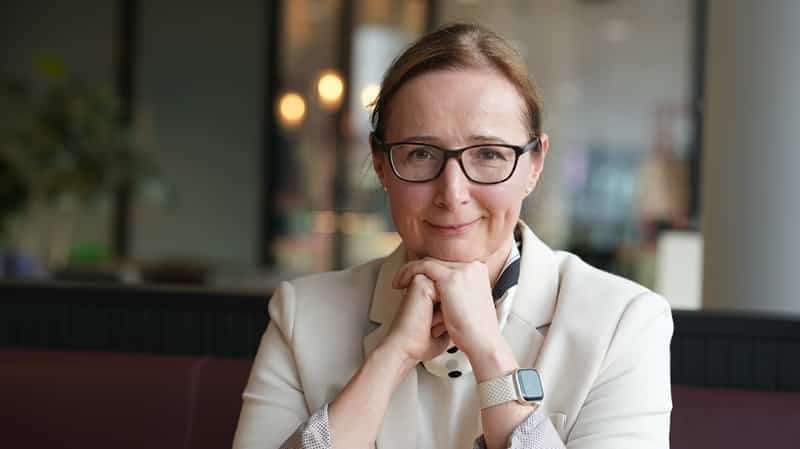
Trainer Practical Requirements Writing, Katarzyna Kot
Katarzyna Kot, trainer ‘Practical Requirements Writing’

After twelve years at Philips and NXP Semiconductors, she worked as a consultant for clients such as BAE Aerospace and ASML. The process of writing requirements seems straightforward: elicit, analyse, validate, document. In practice, however, it takes a lot of preparation. “People often get stuck wondering what they should actually do.”

The workshop

To help teams put their requirements on paper, Katarzyna developed her first workshops around 2017. What began as tailored in-company sessions has grown into a two-day training course called ‘Practical Requirements Writing‘, now open to a wider audience.

The workshop is intended for anyone involved in requirements, such as product managers, system architects, QA specialists, and domain experts. “We look at the entire product lifecycle,” Katarzyna explains. “In every phase there are different stakeholders and therefore different types of requirements.”

'It’s helpful when participants bring their own requirements so we can review and improve them together.'

Participants learn how to analyse stakeholder needs, create context diagrams, structure requirements, and assess their quality in terms of completeness, consistency, feasibility, correctness, and verifiability. “We work with real-world cases so participants can apply what they learn immediately. It’s helpful when they bring their own requirements so we can review and improve them together.”

The workshop is particularly useful for professionals with a few years of experience. “They recognize the challenges from practice and immediately consider to handle them better. Once they start asking questions like ‘How do I apply this in my organization?’ or ‘How do I convince my colleagues?’ they are seeing beyond the surface.”

Challenges

Quality requirements can be tricky to define. Vague terms such as robust or user-friendly need to be quantified. “If you say something must be portable, what does that mean? Weight, dimensions? You translate abstract terms into measurable attributes. That’s how quality becomes concrete and testable.”

It’s also important to know when to stop. “Requirements must be appropriate for the level they’re intended for. There should not be too little detail, but don’t over-specify either.”

Participants often become enthusiastic once they understand why requirements are so crucial. “Some people have never had the value properly explained to them. But as soon as they see how the work contributes to the bigger picture, pride kicks in.”

Thinking

Requirements define what must be delivered. They form the foundation for design and testing and even carry contractual value. In industries such as aerospace and semiconductors, having the right requirements is a legal necessity.

Yet many organizations still struggle with them. “People often find it boring or don’t know where to start,” Katarzyna says. “They don’t see the value right away because it’s weeks of thinking without visible output.”

She compares writing requirements to planning a construction project. “Before building starts, you decide where the power outlets go, where the lights hang, and where the kitchen and washing machine connections should be. You document those decisions so the contractor can deliver exactly what you expect. That’s what requirements do, they prevent surprises for both customer and supplier.”

Before you can even write, Katarzyna adds, you must know who the user is, how the product will be used, what the context is and which standards apply. “Those are all engineering skills.”

An important part of the workshop covers templates and writing rules, such as the Easy Approach to Requirements Syntax (EARS). “That helps prevent ambiguity, but it’s not a fill-in-the-blank exercise. You have to understand what you’re writing. A tool can help — but you still have to think.”

Katarzyna also sees potential in artificial intelligence. “AI doesn’t understand context and can’t write requirements, but it can help analyse them — for example, by detecting inconsistencies.”

Her advice for both AI and templates: “Use technology as an assistant, not as a substitute for your own thinking.”

Engineering

What Katarzyna most wants to emphasize: “Requirements aren’t about writing — they’re about engineering.”

'Good specification isn’t administration — it’s designing with words.'

She smiles. “A colleague from the U.S. once said that, and I’d love to have it printed on a tile. Because that’s exactly what it is: good specification isn’t administration — it’s designing with words.”

This article is written by Marleen Dolman, freelancer for High Tech Systems.

“The thermal frequency domain opens up a new way of thinking”

For Nobleo Technology, precision and innovation go hand in hand. Designer Rik Houwers recently deepened his expertise through the ‘Thermal Effects in Mechatronic Systems’ course, gaining new insights into how temperature fluctuations influence high-precision machines and how modelling in the frequency domain can lead to smarter, more stable designs.

“Building something you design yourself is always fun,” Rik Houwers, designer at Nobleo says, “because you get direct feedback. Unfortunately, that is not always possible.” He studied mechanical engineering at Delft University of Technology, specializing in biomechanics and precision mechanics. He was introduced to Nobleo, where he has now worked for nine years. His work consists mainly of mechanical design and analysis of mechatronic systems and metrology machines.

Due to the multidisciplinary nature of mechatronics, the team is essential. “We work with experts from different fields: mechanical, electronical, control, software, purchasing and sometimes thermal or optical. Understanding the basics of each other’s disciplines, allows effective communication and that makes all the difference. Moreover, the best innovative ideas often are found at the border of multiple disciplines.”

'With this tool in my toolkit, I have even more options to develop creative and smart designs for our customers.'

A high impact niche

Houwers recently attended the course ‘Thermal Effects in Mechatronic Systems‘ offered by Mechatronics Academy through High Tech Institute. During an earlier project, he had seen firsthand how temperature variations can impact measurement accuracy. “In the machine I was working on, thermal disturbances turned out to be the dominant cause of deviations in the measurements. Since then, I’ve wanted to understand those mechanisms better.”

Nobleo’s technical director Frank Sperling had already pointed Houwers to courses at High Tech Institute before. Houwers has previously taken courses such as ‘Passive Damping for High Tech Systems’ and ‘Applied Optics’. The knowledge from both of these courses could already be applied in customer projects. According to him, this new training fits perfectly alongside them. “With this tool in my toolkit, I have even more options to develop creative and smart designs for our customers.”


Houwers shows a flexure mechanism, a test sample containing viscous damping rubber that was aimed at damping away problematic vibrations

The training is recommended for mechatronic designers who focus on high-precision applications. “As soon as you design for accuracies better than tens of micrometers, you usually can’t ignore thermal effects.” According to Houwers, this is fairly precise in the field, but no exception. “For reference, machines at ASML need to achieve nanometer-level precision.”

The course matched well with his background in dynamics. “The level was just right. The instructors, including Theo Ruijl of MI-Partners, explained the theory clearly and always linked it to real industrial examples.”

Understanding thermal effects

The three-day course offered a clear structure. The first day focused on the basics of heat transfer and thermal physics. Day two was about temperature measurement and practical examples, and the third day addressed temperature control in systems. “Thermal systems seem simpler than dynamic systems because they don’t have resonances,” Houwers explains. “But if you tune the controller incorrectly, you can still get an instable system. With a few simple design rules you can prevent that.”

The pace was high and not all assignments could be fully completed in the time available, but that did not bother Houwers. After all, the goal of the course was to absorb as much knowledge as possible in three days and that was delivered.

Although he doesn’t have a direct application for the knowledge he has gained, Houwers sees clear value in it. “At Nobleo, we are constantly working on cutting-edge systems. Sooner or later, those thermal questions will come up. When they do, it’s great to really understand the physics behind them.”

'The most valuable insight I gained from the course came from the frequency-domain to thermal problems. This insight is remarkably powerful for us.'

Thinking in frequencies

The most valuable insight that Houwers gained from the course came from the frequency-domain approach to thermal problems. “Temperature fluctuations each have their own frequency. The day-night cycle changes slowly, the air conditioning might switch on and off every half hour, and people walking by cause air displacements that vary over minutes.”

How strongly these variations affect the accuracy of a machine depends on the process frequency and how quickly the different components react to temperature changes. Heavy, massive components, for example, heat up more slowly than lighter parts, and materials with low thermal conductivity cause heating to occur slow and non-uniform. As a result, certain frequency heating often result in a non-synchronised warming, where one part expands, while the other is still cold. This causes deformation and measurement deviations. By modelling the system in the frequency domain, engineers gain insight into which temperature disturbances matter for the required precision.

According to Houwers, this way of thinking is remarkably powerful. “You can predict how heat spreads through a machine, how quickly parts respond and how that affects positioning. This guides design choices in material, construction, and control strategy.”

At Nobleo Technology, everything revolves around high-tech innovation in the broadest sense. The Eindhoven-based company operates in four complementary domains: Autonomous Systems, Intelligence, Embedded & Electronics and Mechatronic Systems. The first focuses on autonomous vehicles and robots, while Intelligence develops smart algorithms, for example for image recognition and quality control. Embedded & Electronics supports the development of intelligent systems by designing and integrating hardware, electronics and embedded software that enable precise control and smart decision-making. Within the Systems branch, the emphasis is on precision, speed and predictable systems for the industry, from complex chip machines to fruit sorting machines. In that regard the training fits very well with Houwers’ career path in mechatronics at Nobleo.

This article is written by Marleen Dolman, freelancer for High Tech Systems.