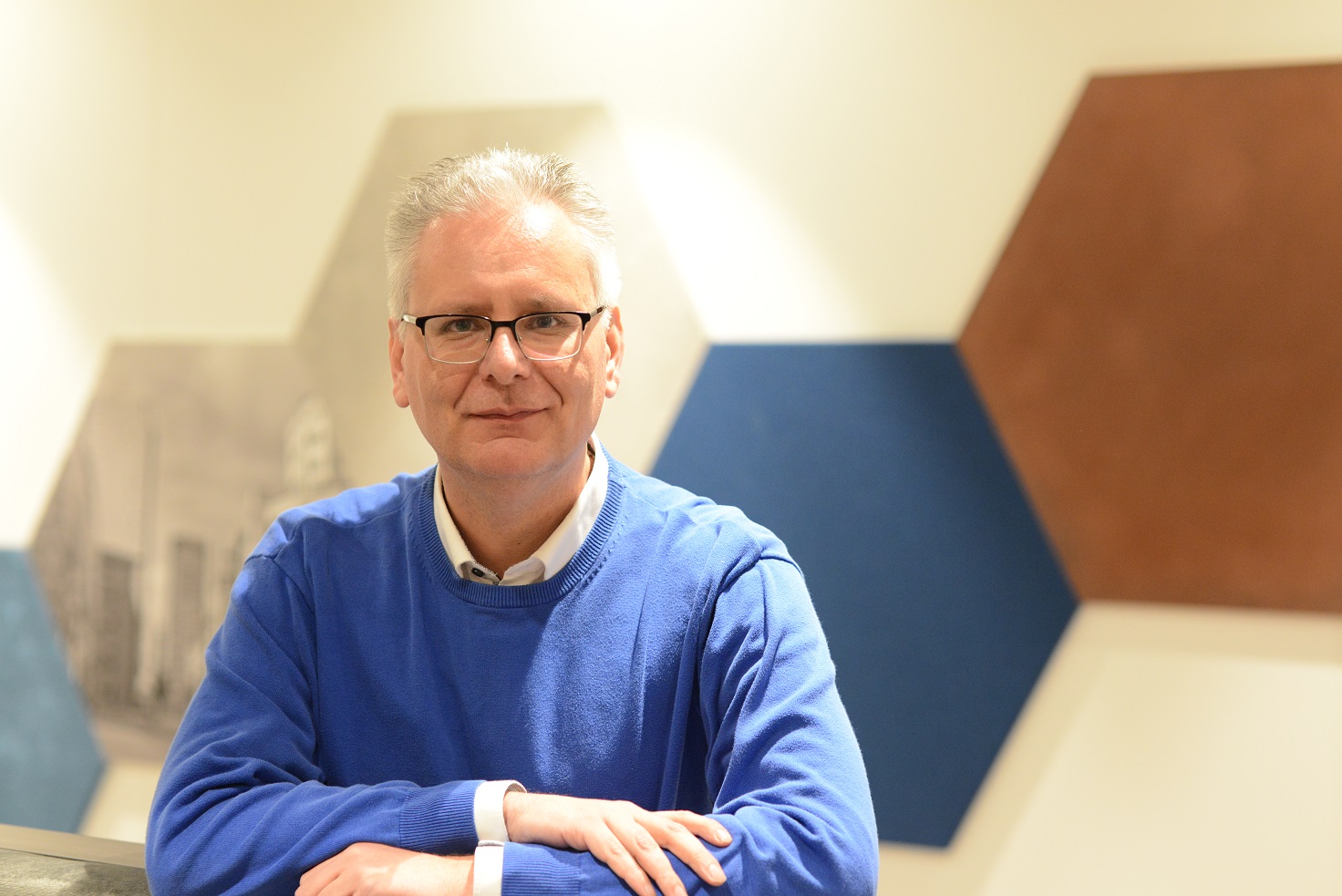
Klaas van Gend has taken the multicore training out of the mothballs

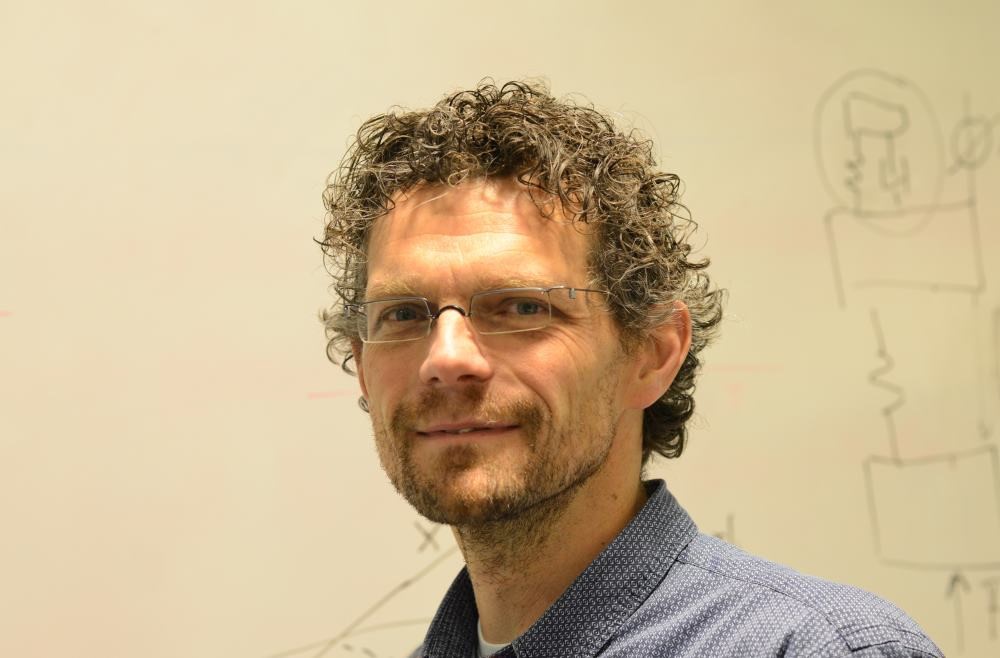
Klaas van Gend expanded High Tech Institutes’ portfolio with the training ‘Multicore programming in C++’ since you do not learn these skills from Dijkstra. The first edition, which is now open for everyone to attend, will take place in Eindhoven on 26 – 28 March 2019.

According to Van Gend, the problem is that many developers failed to receive a pedagogically sound basis during their computer science training. ‘At university it was all about Dijkstra, which means mutexes, locks and condition variables. But the moment you turn on a lock, you only ensure that the code is executed on one core whilst the others temporarily do nothing. So, you really only learn how not to program for multicore,’ he says.

That is why Van Gend has taken the multicore training course given by his old employer Vector Fabrics, out of the mothballs. He realised that the problem is still relevant and decided to offer it under the High Tech Institute flag, for third parties. High Tech Institute organises this 3-day training on 26 – 28 March 2019 in Eindhoven, but is also available for inhouse editions.

Read the entire interview: ‘Multicore programming skills do not come from Dijkstra’.
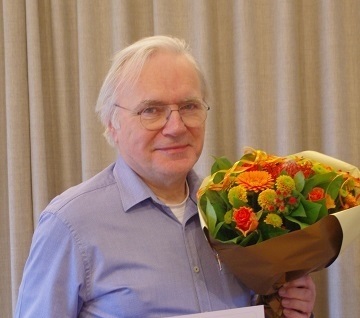
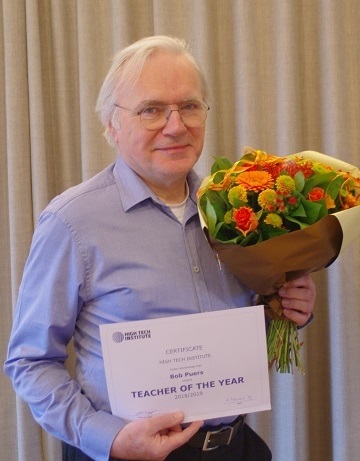
Prof. Bob Puers elected as High Tech Institute’s ‘Teacher of the year’

Bob Puers, lecturer of the microelectromechanical systems training became Teacher of the year during High Tech Institute’s annual get together in Eindhoven.  His training scored a 9.8 with praising comments and even a 10 for him as a lecturer.

In October 2018 Prof. Bob Puers was asked to come to Beijing to lecture an incompany edition of his MEMS training to a group of 14 participants. Puers got the highest overall score of 9.8 out of 10 points and a score of 10 for him as a lecturer. Participants gave several praising comments. ‘It was an excellent training both in terms of contents and presentation. The trainer was exceptional in answering the questions raised’, one of the trainees commented. Another participant pointed out that the lecturer had shown authority on his subject. Other positive comments: ‘Professor’s way of teaching is extraordinarily good’, and ‘The professor was very friendly and has very good communication and comprehensive and easy to understand.’

Bob Puers is working at the Catholic University of Leuven. He is lectures our electronics training ‘Microelectromechanical systems’ once or twice a year. The 3-day course introduces designers to the basic theory of MEMS, shows how these devices are processed and addresses various applications of MEMS in sensors and actuators. Usage issues, assembly and housing, testing and interconnection are other subjects.

This year’s get together, on 4 February 2019, was held at BCN in Eindhoven. Besides some important clients, all of our lecturers were invited to come. It is a High Tech Institute tradition to elect the Teacher of the year, based on all training evaluation forms.

Fully booked knowledge session regarding working in the Dutch high tech culture

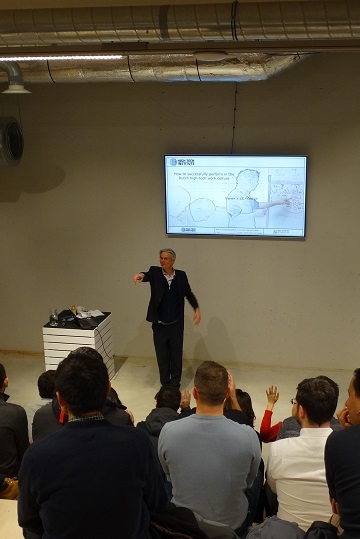
150 expats registered for free workshop on performing in the Dutch high tech work culture

On the 13th of November our partner ‘Settels Savenije & Friedrich’ organised a knowledge session on how to successfully perform in the Dutch high tech work culture. This free workshop by Jaco Friedrich in the TAQ building at Strijp-T even got fully booked. The next one is already scheduled and open for registration.

Dutch work culture
If you’re new to Holland, a lot of things may be different from what you’re used to in the workplace. For example, Dutch colleagues expect you to always say what you think – even if it means contradicting your boss. And you can expect them to comment on your work, too. Dutch jobs come with a lot of freedom – and a lot of responsibility, right from the start. What’s the best way to handle that? And all those seemingly endless meetings – how do you ever get things done? How do you move decisions in the right direction, when it’s unclear who’s in charge of making them?

2-day Training
In 2018 Jaco developed the training ‘How to successfully perform in the Dutch high tech work culture‘. It is intende for non-Dutch technology professionals working with Dutch colleagues.  You’ll learn the history behind the Netherlands’ unique approach to work, and why it’s a plus in the technology industry. You’ll also practice the concrete day-to-day skills you need to survive – and thrive. The next edition will take place in Eindhoven on 17 & 18 January 2019.

Free workshop
Jaco decided to organise some free knowledge sessions together with the Holland Expat Center South, to introduce the training. The next session will take place on the 24th of January 2019. Registration is required, so please register here.

Passive damping for high-tech systems training introduced to address dynamic problems

High Tech Institute and Mechatronics Academy are introducing a new training focused on passive damping for high-tech systems. The first edition of this training will take place next April in Eindhoven, the Netherlands.

Over the past few years, efforts have been made to better understand the underlying principles of damping which has led to spectacular results. Experts from industry and academia share the latest insights and design approaches in the new short course ‘Passive Damping for High Tech Systems’.

When designing high precision mechatronic systems it is essential to achieve a high bandwidth of the feedback control loop. This is necessary in order to suppress the negative effects of disturbing forces on the machine accuracy and settling time. Dynamics and resonances play an important role in limiting the achievable bandwidth and settling time. Much focus is directed towards high ‘eigenfrequencies’ and understanding vibration modes including the mechanisms of excitation and observability. However, as accuracy and resulting bandwidth requirements are getting tighter, the requirements in terms of ‘eigenfrequencies’ of the system are sometimes reaching the limits of what is physically possible. Passive damping offers additional design space and is becoming a key design parameter for achieving these extreme requirements. Despite the risk of introducing hysteresis related virtual play, passive damping can significantly simplify controller design and improve positioning performance.

Sign-up for the ‘Passive Damping for High Tech Systems’ training here.

Huub Janssen takes the lead in Design Principles for Precision Engineering

Huub Janssen from Janssen Precision Engineering is the new figurehead of the Design Principles for Precision Engineering training course. His ambition is to spread know-how in the vein of Wim van der Hoek.

A longstanding wish of Huub Janssen of Janssen Precision Engineering has now been fulfilled: he can now share his knowledge in the same way that his mentor Wim van der Hoek did. Read the entire interview: ‘Not just lecturers, but also lots of interaction‘.

Last June, the debut of Design Principles for Precision Engineering was a success, with an average score of 8.4. Besides Huub Janssen, trainers include Dannis Brouwer  University of Twente), Piet van Rens (Settels Savenije), Kees Verbaan (NTS) and Chris Werner and Roger Hamelinck (Entechna Engineering).

Join us at the Benelux RF Conference

What can I expect during this RF conference?
> sessions on product-specific applications with a focus on innovative solutions in combination with advanced wireless technology
> in-depth sessions highlighting trends such as RF energy and RF power and focusing on engineers, designers and technical managers in the advanced RF field

Target audience

  • engineers;
  • team leaders;
  • technical managers;
  • product developers;
  • innovation managers.

Mark your calendar and join us at the Benelux RF Conference beneluxrf.com

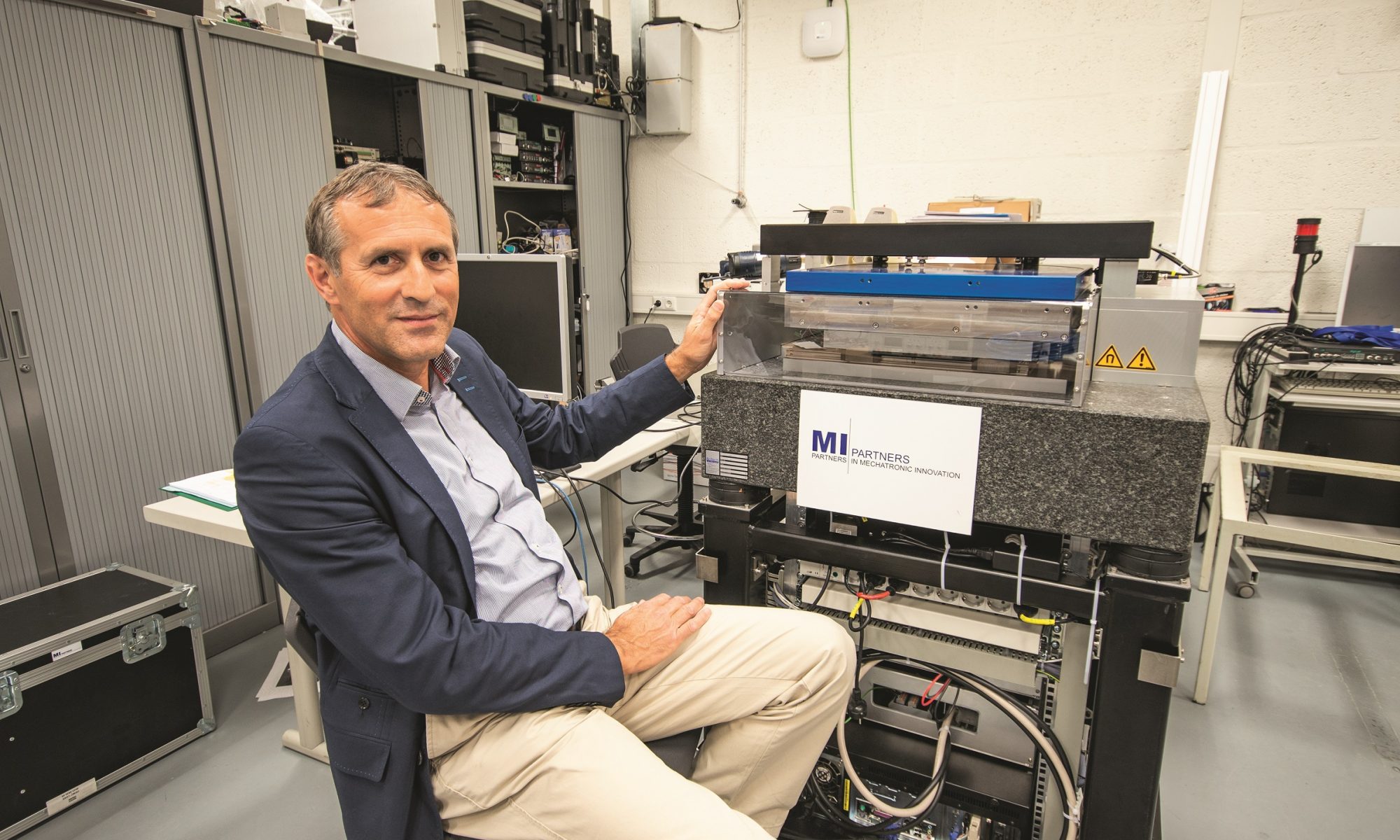
Mechatronics System Design makes teams more effective

‘It costs you two percent on an annual basis, but it makes you ten percent more effective’

Mechatronics System Design 1 and 2 are amongst the most popular training courses in the high tech industry. The courses originated in Philips CFT, where system development became increasingly complex in the 1980s. Rien Koster saw that the solution lay in better collaboration between disciplines. Former CFT member, Jan van Eijk, explains why it is good for top specialists to hang out with, and talk regularly to colleagues from other disciplines.

Read the entire interview with Prof. Jan van Eijk here:
– English version

Dutch high tech culture – Free workshop

How to successfully perform in the Dutch high tech work culture

Jaco Friedrich will talk about the do’s and don’ts of working in Dutch High Tech Culture.

Dutch culture is different to any other, especially in the high tech sector. Your boss expects you to contradict him. You’ll often get instant critical feedback – and be expected to appreciate it…

This free knowledge workshop/lecture on the 13th of November is open to all who are working in Dutch High Tech, or are planning to do so. Hiring managers, R&D managers, Expats etc.

Register:

Program 13 November 2018:

  • 17.45 – 18.00 Doors open;
  • 18.00 – 19.30 Do’s and Don’ts of… – Jaco Friedrich;
  • 19.30 – 20.00 Drinks & Snacks.

Location:

  • Settels Savenije Group of Companies, TAQ Building Strijp-T Eindhoven, The Netherlands;
  • Route to TAQ.

If you want to attend the full workshop, please have a look at the online course description

Dutch Optics Centre joins forces with our partner T2Prof on optics course

A partnership between TNO, Dutch Optics Centre, TU Delft, High Tech Institute and T2Prof has redesigned the course Applied Optics.

This advanced training is scheduled at TNO Delft in the beginning of 2019. The Applied Optics training is tailored to bring engineers with a non-optical background like electronics, mechanics and chemistry up to speed with their optic expert team members.

Read the newsitem which was published in Mikroniek 2018 nr. 4 or have a look here.

Our vision & ambitions for technical post-academic education

Combining practical experience with up-to-date knowledge

When Philips made the decision to spin out the training courses from its former Centre for Technical Training, it was with the explicit intention that this specialist knowledge remained in the Netherlands. The result of this decision was a unique partnership: High Tech Institute.

In a personal contribution, the institute’s managing director René Raaijmakers offers a status update and outlines the institute’s vision and ambitions for technical post-academic education.

Read the complete article, which was published in Mikroniek 2018 #4: Combining practical experience with up-to-date knowledge.