Global interest for our EMC design techniques course

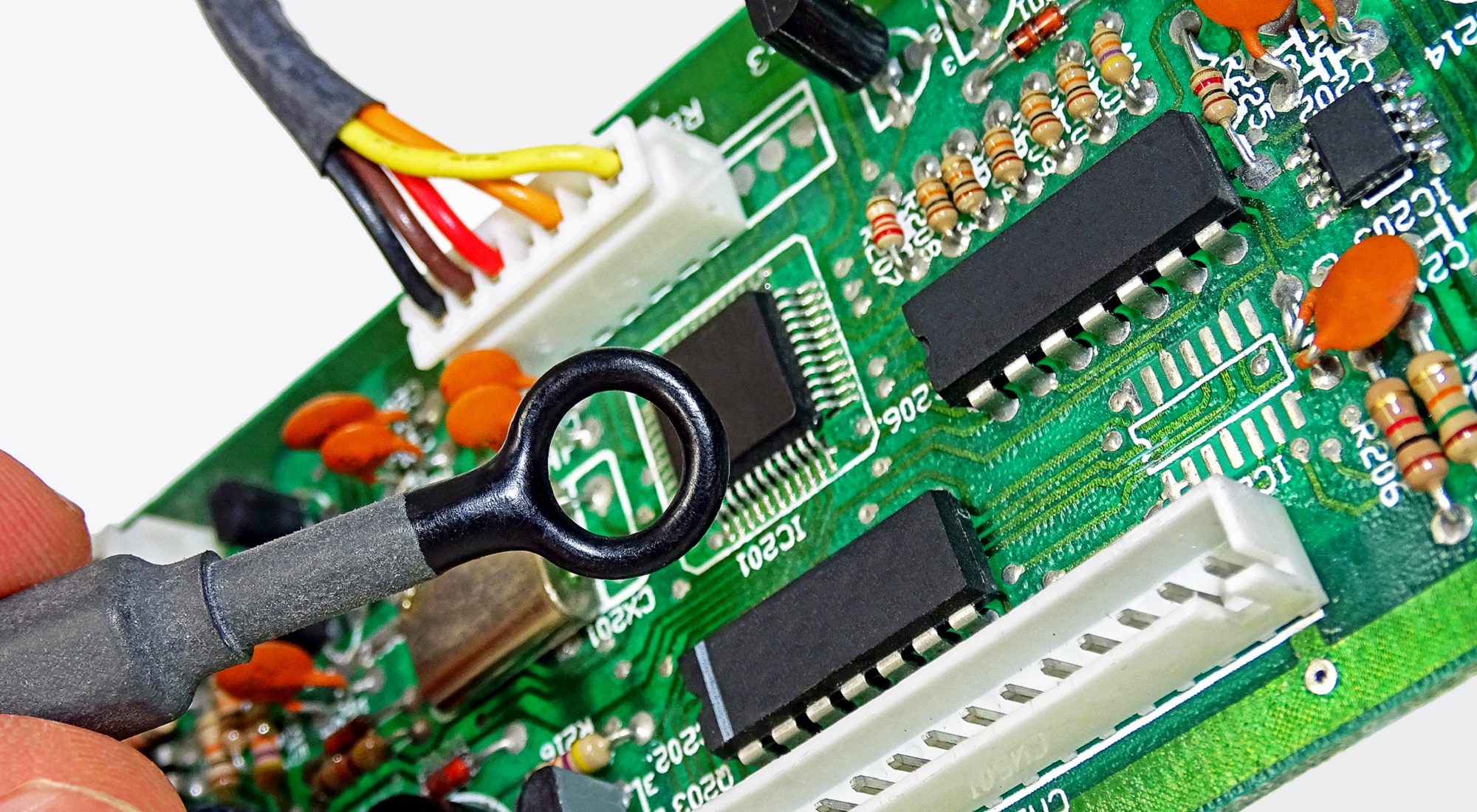
We are grateful to have received participants from all over the world for our course ‘Electromagnetic compatibility – design techniques’.

On the 9th of April we started this 5-days course with a varied group:

  • 2 participants from Saudi Arabia;
  • 2 participants from Slovenia;
  • 1 participant from Romania;
  • 1 participant from Germany;
  • 1 participant from Belgium;
  • 4 participants from the Netherlands;

Our team of lecturers taught about electromagnetic emission and susceptibility in products and systems: problems, analysis methods, measures. The issues addressed evolved and now cover a larger frequency range from DC up to the 6 GHz level discussing new problems and matching solutions.

All 11 participants filled out our evaluation form. We are delighted to announce that the average overall score is 8.9 out of 10! The lecturers were also assessed with an average score of 8.9 out of 10. Congratulations to you all!

Some of the quotes participants wrote down:
– ‘The training was well balanced and the contents were well prepared’.
– ‘I have learned a lot on theory and examples for EMC’.
– ‘Everything was beneficial’.
– ‘Very helpful in gaining more insight about EMC design and development techniques’.
– ‘I like the hands-on approach’.

Join us at the Dutch Machine Vision Conference 2018

On 17 May we are present at the Dutch Machine Vision Conference 2018.

Learn about the latest trends in machine vision, such as deep learning, embedded vision, pattern recognition, low-cost vision and 3D vision. And get inspired by high-end vision applications in production and agro.

This completely new conference focusses on trends in machine vision technology and offers a strong programme of presentations on various subjects. The target audience consists of developers of vision systems, product managers of machines that rely on vision technology, technical management involved in vision system projects, engineers from various areas that have to work closely together with machine vision experts, decision makers in high tech, suppliers of high tech vision modules of vision software and services.

Off course we would be happy to answer your questions regarding our courses, especially ‘Machine vision in mechatronics systems’ and ‘Practical machine learning’.

As a sponsor of this conference, we can provide a discount code. By using this code, the entrance ticket will only cost you € 200,- instead of € 275 or € 350 excl. VAT. Please ask for this code per e-mail: training@hightechinstitute.nl

Mark your calendar and join us at the Dutch Machine Vision Conference 2018.

machinevisionconference.nl

Successful revised 3-days edition: Advanced feedforward control

The hands-on course ‘Advanced feedforward control’ focusses on techniques to improve the performance of motion systems by advanced feedforward and learning control.

Our latest edition in March 2018 (fully booked) organised by dr. ir. Tom Oomen, with additional lecturers from Academia, including prof. dr. ir. Maarten Steinbuch, ir. Lennart Blanken, and ir. Robin de Rozario, as well as lecturers from industry, including dr. ir. Joost Bolder (ASML) and dr. ir. Sjirk Koekebakker (Océ), was a great success. With twelve participants from eight renowned companies from all over the world US 4x, Israel 2x, Germany 1x, Czech Republic 1x and The Netherlands 4x this edition had an overall score of 9/10. The majority of the participants were from industry, with a large range in variation of work experience, and one participant from academia.  For the first time the training duration was extended to three days, which provided time for additional topics and more time for hands-on experiments.

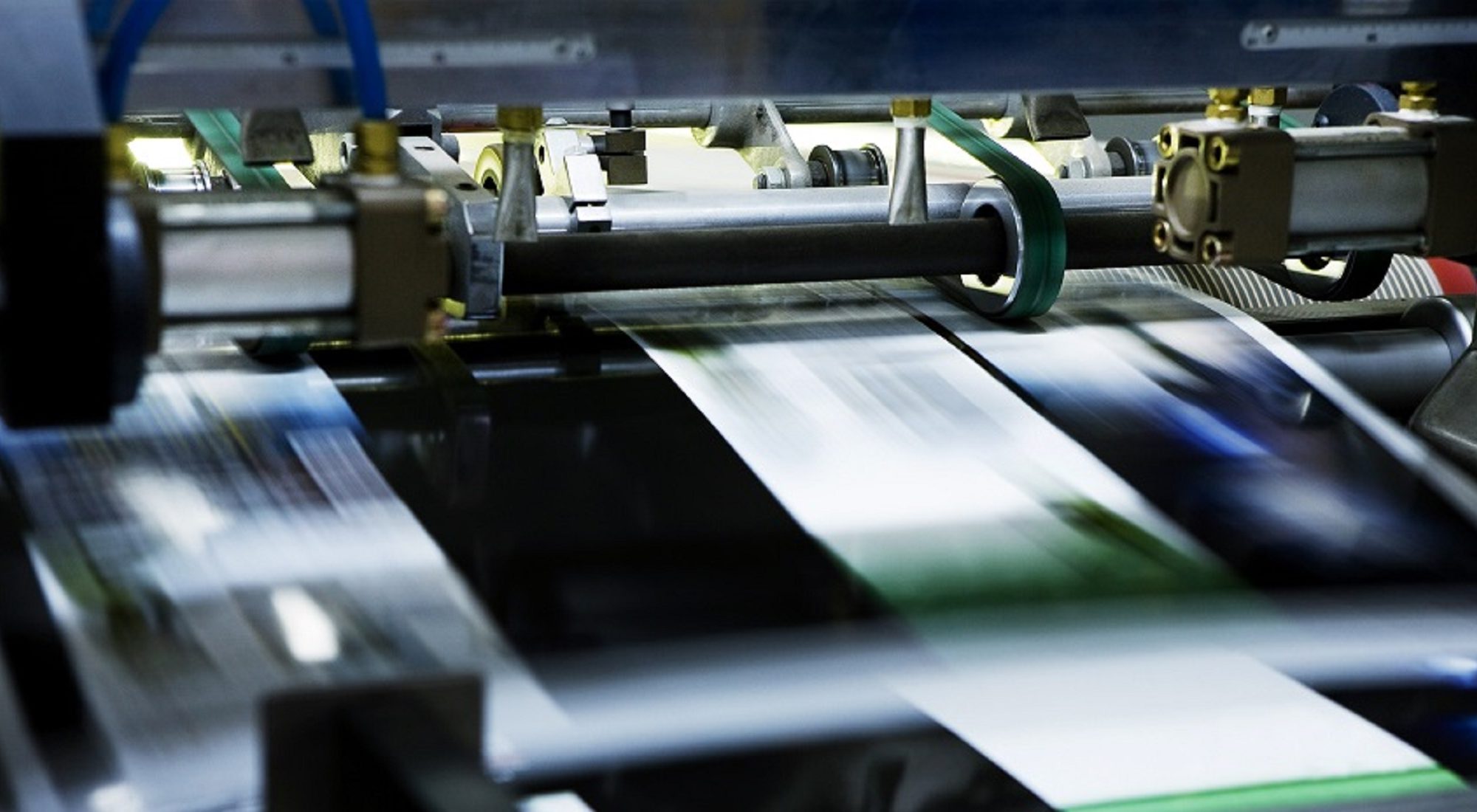
Already on day one, all participants managed to design a frequency domain Iterative Learning Control (ILC) algorithm and implement this successfully on a desktop printer. All participants also tried to tune a standard feedforward tuning, but even for the best tuned results, the ILC drastically outperformed the traditional approaches. The second day, the learning controller is adapted to a basic repetitive controller, enabling continuous operation of the printer setup.

The second half of the course contained several diverse topics, with speakers from both academia and industry. On the one hand, lifted ILC, which is more mathematically and academically oriented is investigated. On the other hand, the algorithms are tailored towards automated feedforward tuning, enabling the automatic tuning of complex feedforward filters, including input shapers. This topic is highly relevant for industrial applications with varying tasks, and attracted considerable interest from the participants. Furthermore, very recent, even unpublished research has been presented to avoid modelling steps in learning algorithms. All of these algorithms have been implemented  successfully by the participants as well on the desktop printer setup. Finally, the course has been concluded by a presentation from an industrial expert on learning control in printing.

A few comments of the participants given at the end of the training are:

  • Great lecturers and great content!”
  • “Very well prepared and lectured. Balanced mix of theory and applications.”
  • “Excellent course, delivered enthusiastically and strikes the right balance between theory and experiments! Congrats!”
  • “Excellent training! I enjoyed it very much and I’m looking forward to implementing some of the concepts learnt from this training!”
  •  “Very practical and useful, the explanation is easy to understand”

Interested in this course? Read the entire description of our ‘Advanced feedforward control’ training here and register in time since a limited number of seats are available!

New in our portfolio: Training practical machine learning

Want to know more about machine learning and deep learning?
Our new 5-day course ‘Practical machine learning’ is intended for engineers from R&D, practitioners and teachers interested in machine learning and deep learning. The course is suitable both for those who are new to machine learning and who are already familiar. The first group can concentrate on the basic concepts and learn to apply these in projects. The last group can improve their skills to design accurate and robust systems.

Our first edition will take place in Eindhoven, on 14 – 18 May 2018

After attending this course, the participant:

  • has a solid and state-of-the-art knowledge on machine learning and its applications;
  • knows how to make a good labeled set;
  • knows how to train and assess a classifier;
  • knows to develop an efficient classifier;
  • knows how to extract a useful data set from a raw data set,
  • knows how to use the perClass software;
  • knows the basics of deep learning and when to use it;
  • knows how to build a robust Machine Learning system suitable to solve real-world industrial projects on a step-by-step approach;
  • knows how to avoid common pitfalls;

Are you interested? Read the entire course decription here.

Annual conference on high-end system engineering & disruptive mechatronics

Join us at High-Tech Systems 2018

High-Tech Systems is the annual conference with a focus on high-end system engineering and disruptive mechatronics. This year’s keynotes will be delivered by Jim Stolze (Aigency)and Yves Perriard (EPFL). During the day you can attend interesting sessions on Industrial Internet of Things, Cobotics and Design for 3D.

Mark your calendar and join us at High-Tech Systems 2018 hightechsystems.nl

We as High Tech Institute will be present, so visit our booth to check out our latest courses!

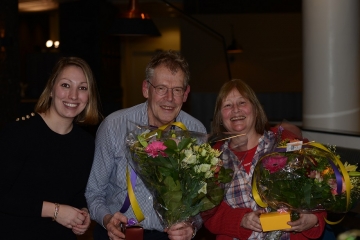
Trainer duo of the year: Wendy & Clemens!

Annual New Year’s reception

Each year, during the reception for all our trainers, we announce the ‘Trainer of the Year’.

To find out who got the best scores, we compare all evaluation forms in which course participants give a score for the trainer’s performance.

This time the highest score, an average of 9.0 out of 10, was given to a trainer duo. Next to that their training scored an 8.7 out of 10 as overall score.

We are happy to congratulate both Wendy Luiten MSc and Clemens Lasance MSc! Many thanks for their enthusiastic contribution to the course.

Cooling of electronics workshop

In 2017 they lectured the following training course for several times: Thermal design and cooling of electronics – workshop with participants from the Neterlands, Turkey, Great Britain and the U.S.A.

Some of the quotes course participants wrote about them as a duo:
– “Enough enthusiasm & anecdotes to keep everything interesting.”
– “Great lecturers.”
– “Good lecturers, great at engaging everyone and very knowledgeable.”
– “Two very experienced and passionate teachers who know a lot about the topics.”
– “The lecturers work well together: Rules of thumb + quick analysis from Wendy + State of the art plus CFD from Clemens.”

Also read the interview with Wendy Luiten MSc, in which the origin of the thermal workshop is being explained.

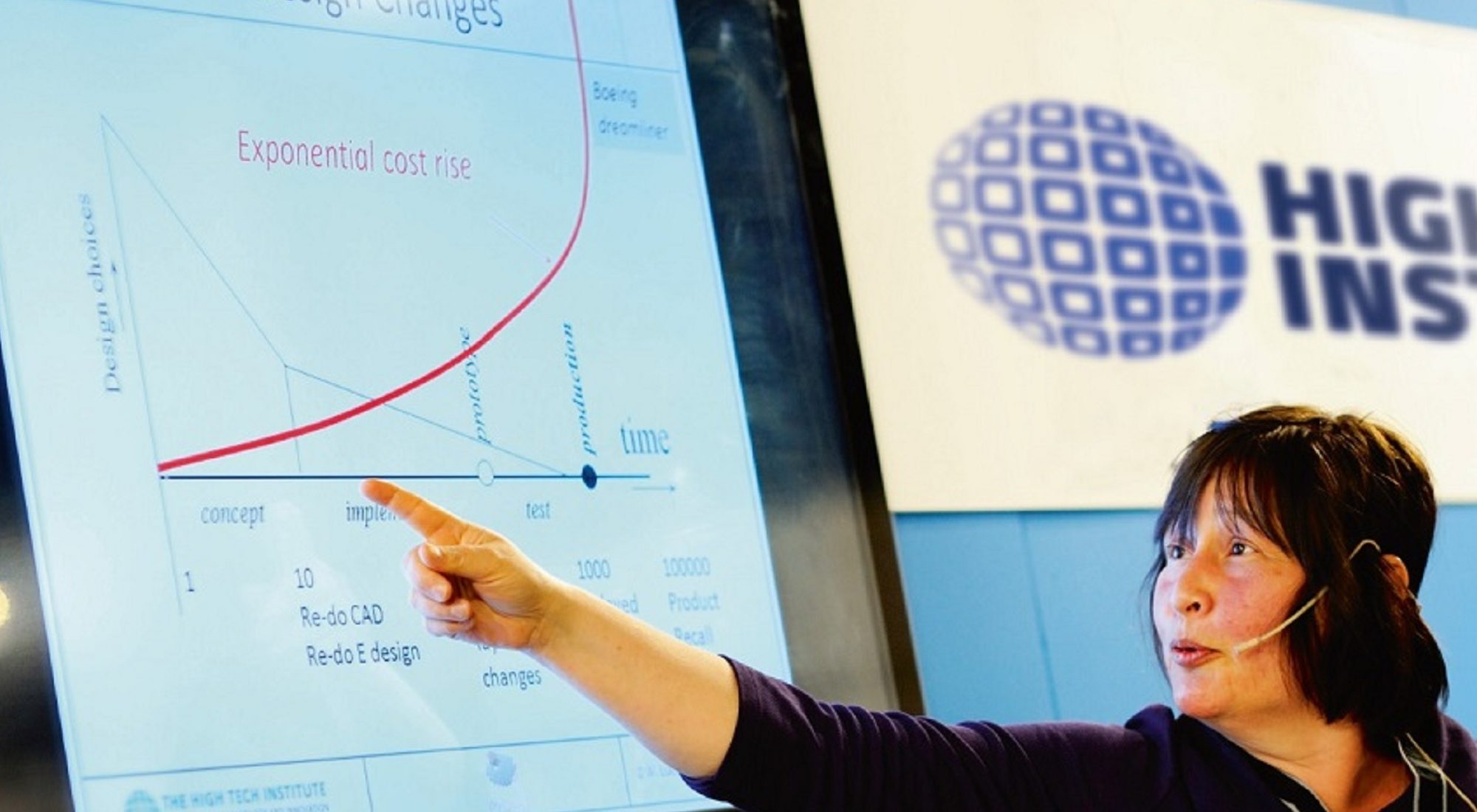
Cooling electronics: high-level puzzle solving

Designing cooling-architecture for electronics is very similar to high-level puzzle solving


Heat lessens the performance of many electronics, so adequately cooled electronics immediately yield commercial advantages. Smart thermal designs are also cost-effective. ‘Your commercial advantage will increase immediately as soon as you can deliver at lower costs or offer more for the same price’, says Wendy Luiten, who lectures the workshop  Electronics cooling hermal design.

Read the entire interview here.

New Dutch Ultra Low Power Conference in Nijmegen

A new conference is born: Dutch Ultra Low Power Conference.

Based on the Novio Tech Campus Nijmegen the Dutch Ultra Low Power Conference brings together Belgian and Dutch professionals and companies involved in the development and application of devices with ultra low power technologies.

Intended for
It targets engineers, designers and technical managers in the advanced field of energy harvesting and ultra low power and energy-efficient designs.

Programme
The conference programme will be published soon but will contain:

  • Sessions on medical applications with ultra low power demands;
  • in-depth sessions highlighting trends in energy efficiency and energy harvesting.


Our booth
We would like to welcome you to our booth and are happy to provide some more information about our courses, especially our 2-day workshop ‘Ultra low power for Internet of Things‘.

Location
Novio Tech Campus
Transistorweg 5
6534 AT Nijmegen
The Netherlands

With precision training to specialist level: bronze certificate for Frank de Groot of Tegema

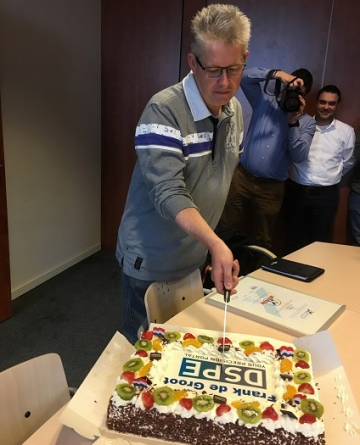
Frank de Groot, senior engineer at Tegema, has been awarded the Bronze ECP2 certificate. He achieved this by following a number of courses that have been certified in the ECP2 programme: the European certified precision engineering course program. ECP2 is a collaboration between the European and the Dutch Association for precision engineering, euspen and DSPE, respectively.

Starting in spring 2014, Frank de Groot followed the Tribology and Design principles for precision technology courses at Mikrocentrum, and the Mechatronics system design – part 1 and part 2Thermal effects in mechatronic systems, and Basics & design principles for ultra-clean vacuum courses at The High Tech Institute. He also took part in the LiS Academy Summer School on Manufacturability, organised by the Leiden Instrument Makers School. With a total of 29 points (each point represents one course day) he amply fulfilled the condition of obtaining 25 points for courses achieved within five years. On 1 December, he was put in the spotlight.

The courses mentioned, which cover a broad palette, are in line with Frank de Groot’s ambition to become a technical specialist in the area of ​​precision technology. That is according to Albert Coolen, manager of secondment at Tegema, multidisciplinary high-tech engineering firm based in Son and Arnhem, the Netherlands. “Tegema encourages the self-development of its employees. Frank has, for example, worked at several departments within ASML, and found that he was fully developed as a senior engineer. Together with him I have set out a long-term path to realise his ambition of becoming a technical specialist and he is following this path at a rapid pace. The drive really comes from within him. We coach our employees and offer them opportunities, but the initiative must come from them. In this respect Frank, who is also celebrating the milestone of a 12.5-year contract with Tegema this month, is certainly an example for others.”

Frank de Groot is the fourth engineer to receive the Bronze ECP2 certificate since certifying engineering courses started in 2009. In 2015, the DSPE initiative was scaled up to the European level.

Course Additive manufacturing (3D-printing), launched by Fontys and High Tech Institute

Together with our contentpartner Mechatronics Academy we now provide Fontys’ workshop Design for additive manufacturing. This hands-on course for 3D-printing already took place at ASML, Fokker Landing Gear, Océ, Philips Lighting, Thermo Fisher (former FEI Company) and Vanderlande.

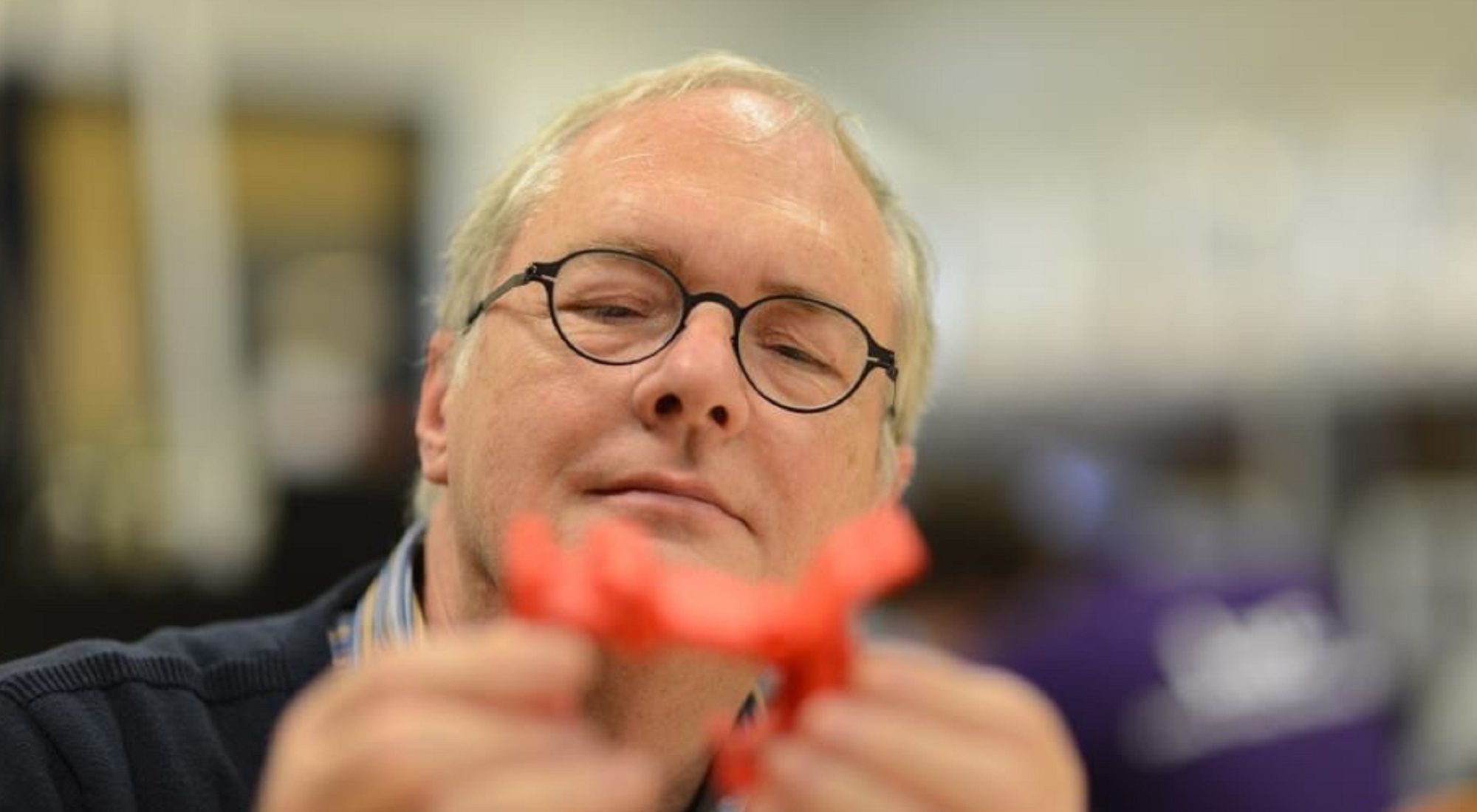
Because of this cooperation now also individuals can participate. After attending this training participants are able to apply the obtained knowledge into practice. The 3-day mixture of theory and practice has already led to pioneering innovations in various companies. Additive manufacturing, of just 3D-printing, is a technologie which can potentially lead to breakthroughs. Three years ago, Ricardo Abdoel took the initiative to develop courses for this new production technolgy. In Sjef van Gastel he found someone who could lead those courses. Until recently Van Gastel was involved as a senior strategic marketing manager at Kulicke & Soffa, the American company that took over Assembléon in 2016.

To discover the killer application, Sjef van Gastel, research and course leader at Fontys, has thought of a methodology to find out potential breakthrough-designs: an approach which has to improve the characteristics of the part or the system. The starting point is to realise a huge improvement with 3D-printing relative to the ‘old’ technology. ‘It is important that the participants find out themselves what it is and how to apply the design guidelines; says Van Gastel.

High Tech Institutes’ first edition of Design for additive manufacturing will start at the 13th of December.

About Fontys

Fontys takes care of education and research and is the biggest, broad, public knowledge institution of the South of the Netherlands. By connecting education and research of innovation processes, Fontys wants to be a innovation engine of the region.

About High Tech Institute

High Tech Institute is the leading training partner fo the high tech industry which has the origin in the former training courses of Philips Centre for Technical Training (CTT). Together with its knowledge partners (such as Mechatronics Academy) in electronics, optics, mechatronics, precsion engineering, system architecting, software and leadership High Tech Institute ensures a constant innovation of its courses.